
FAQ: Timber vs Steel Framing
Why We Build Tiny Homes on Wheels in Timber
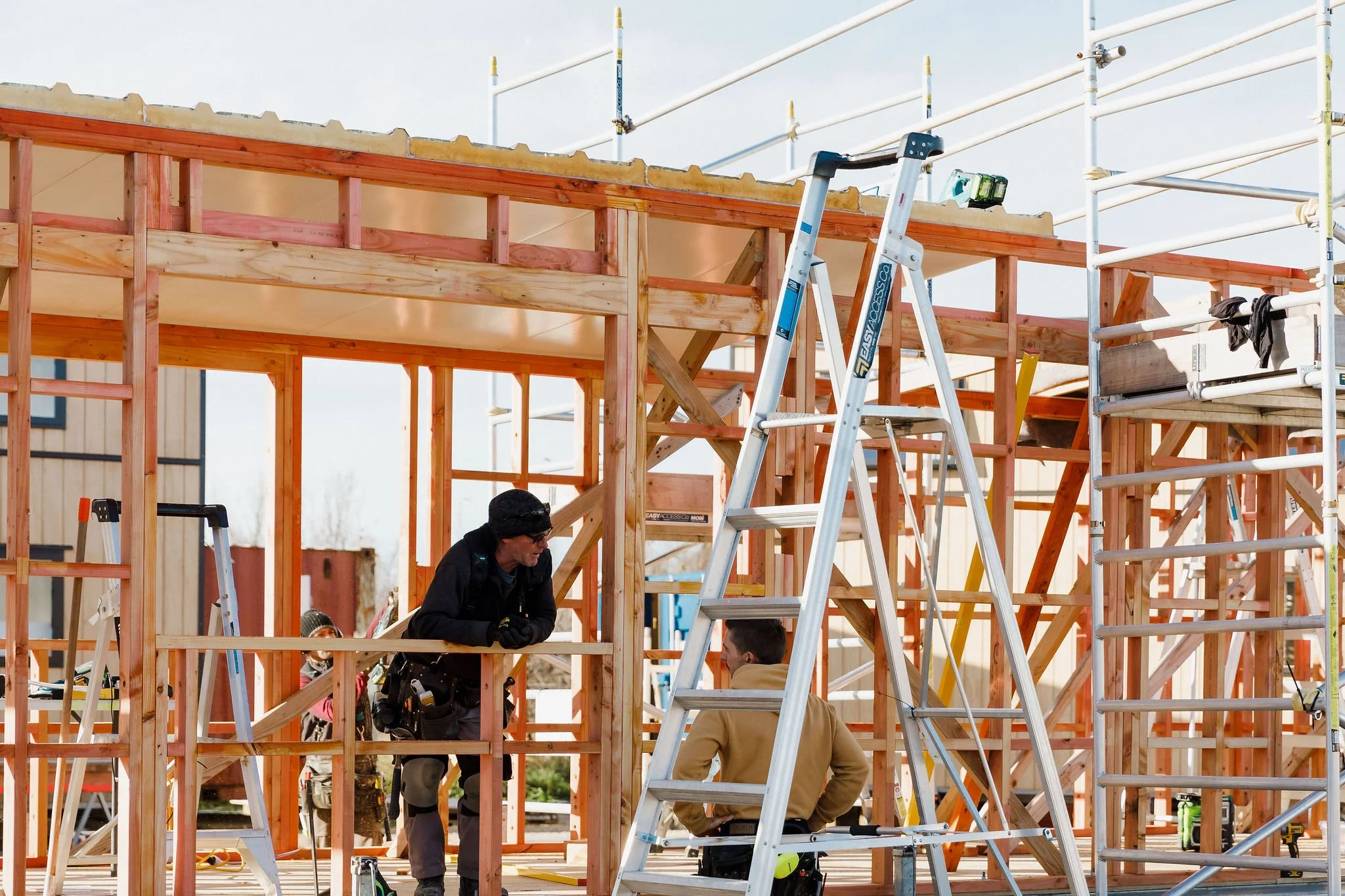
A home that moves is different
A fixed house sits still for its whole life. A tiny home on wheels gets towed down a highway, bounces over a driveway culvert and gets craned over a fence. Every one of those events puts the frame under stress that a house never sees.
Timber flexes a little. It absorbs vibration and movement rather than transferring it rigidly through every joint. That's a good thing in a home built to be relocated, and it's the single biggest reason we've stayed with timber over seven years and dozens of builds.
Thermal bridging
Steel moves heat and cold quickly. A steel stud in a wall is a highway for temperature between the outside and the inside, which is why steel-framed buildings need careful thermal breaks to perform.
Timber is a natural insulator. A timber stud slows heat transfer, so the wall performs closer to the insulation rating you paid for. In a small home where the walls are a bigger share of the envelope, that difference is noticeable in comfort and in running costs.
Condensation and moisture
Tiny homes are compact. Two people cooking, showering and breathing in 30 square metres produce a lot of moisture, and condensation control matters more than it does in a big house.
Cold steel studs create cold spots on the inside of the wall where moisture condenses. Timber has fewer of those thermal bridge points, so the risk is lower. Good ventilation and insulation still do most of the work whatever the frame is made of, and we'll never tell you framing alone solves moisture.
Repairs and changes
Every carpenter in Australia can work with a timber frame. Want to move a window in ten years, add a deck connection or repair damage? Any local trade can do it without specialist tools or engineering.
Australia has generations of timber building tradition. Materials, fixings, sarking systems and workmanship standards are all readily available and well understood. That matters for the long life of the home and for whoever owns it after you.
Acoustics, feel and sustainability
Timber interiors sound and feel different. There's no metallic resonance, and the space reads warmer and calmer. Our clients comment on it more than anything else when they walk into a Ruru home.
Timber is renewable when sourced responsibly and has lower embodied energy in most applications. We build with Australian plantation pine, treated for termites to Australian standards. That's part of why the University of Queensland chose to partner with us on research into timber construction for small homes.
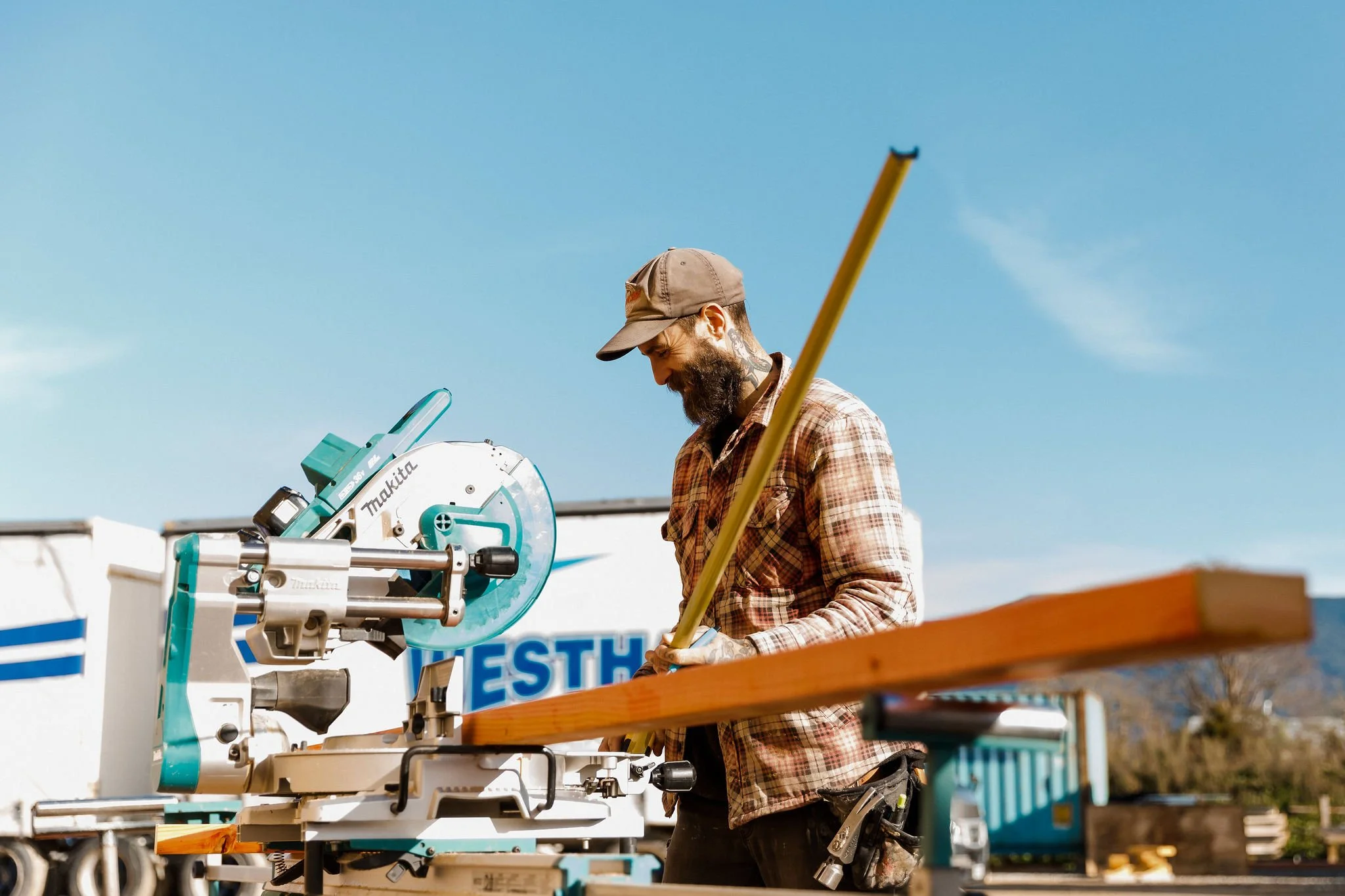
Where steel has the edge
Weight is a fair question and steel isn't automatically lighter. Weight depends on the whole build: cladding, glazing, joinery, chassis. Both frames can be engineered to work. Steel is straighter out of the pack, immune to termites without treatment and familiar to volume caravan manufacturers. If someone is building hundreds of units a year on a production line, steel makes sense for them.
We build a small number of homes very carefully, for people who'll live in them for years and move them at least once. For that, timber is the better material, and we're the only builder in Australia doing it this way.