Case Study: Ira’s Journey
A home two hundred metres from work. Nelson, New Zealand.
Who Ira is
Ira is a nurse. She works near Nelson Hospital, cycles to work, keeps a tidy life and had been renting in Nelson for longer than anyone should have to. She is not a property developer or an investor. She wanted one thing: a home of her own, close enough to the hospital to bike, that nobody could sell out from under her.
That is a hard thing to find in Nelson on a nurse's income. Buying a house was out of reach. Renting meant the next move was always somebody else's decision.
What she decided
Ira came to us in autumn 2026 having already done her homework. She knew a tiny home on wheels was the only way she could own her home outright on her own money, and she knew the catch: owning the home solves half the problem. You still need somewhere to put it.
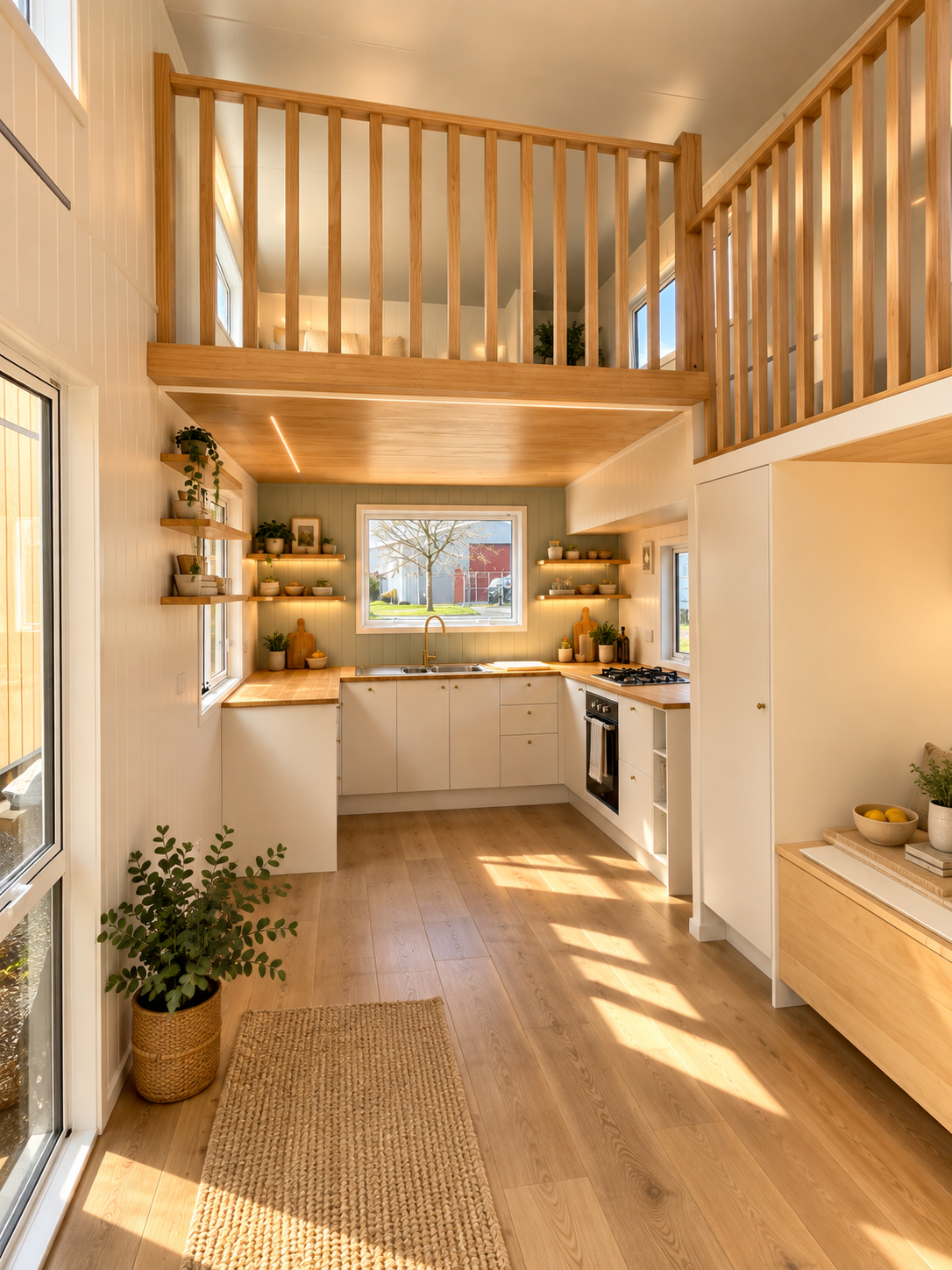
She ordered a double-storey Toroa, ten metres by three, with a full staircase rather than a ladder, storage built into every riser, a U-shaped kitchen with a sage green feature wall and brass tapware, and a bathroom with a floating vanity and a round backlit mirror. Heat pump for the Nelson winters. Light timber throughout so the place feels bigger than it is.
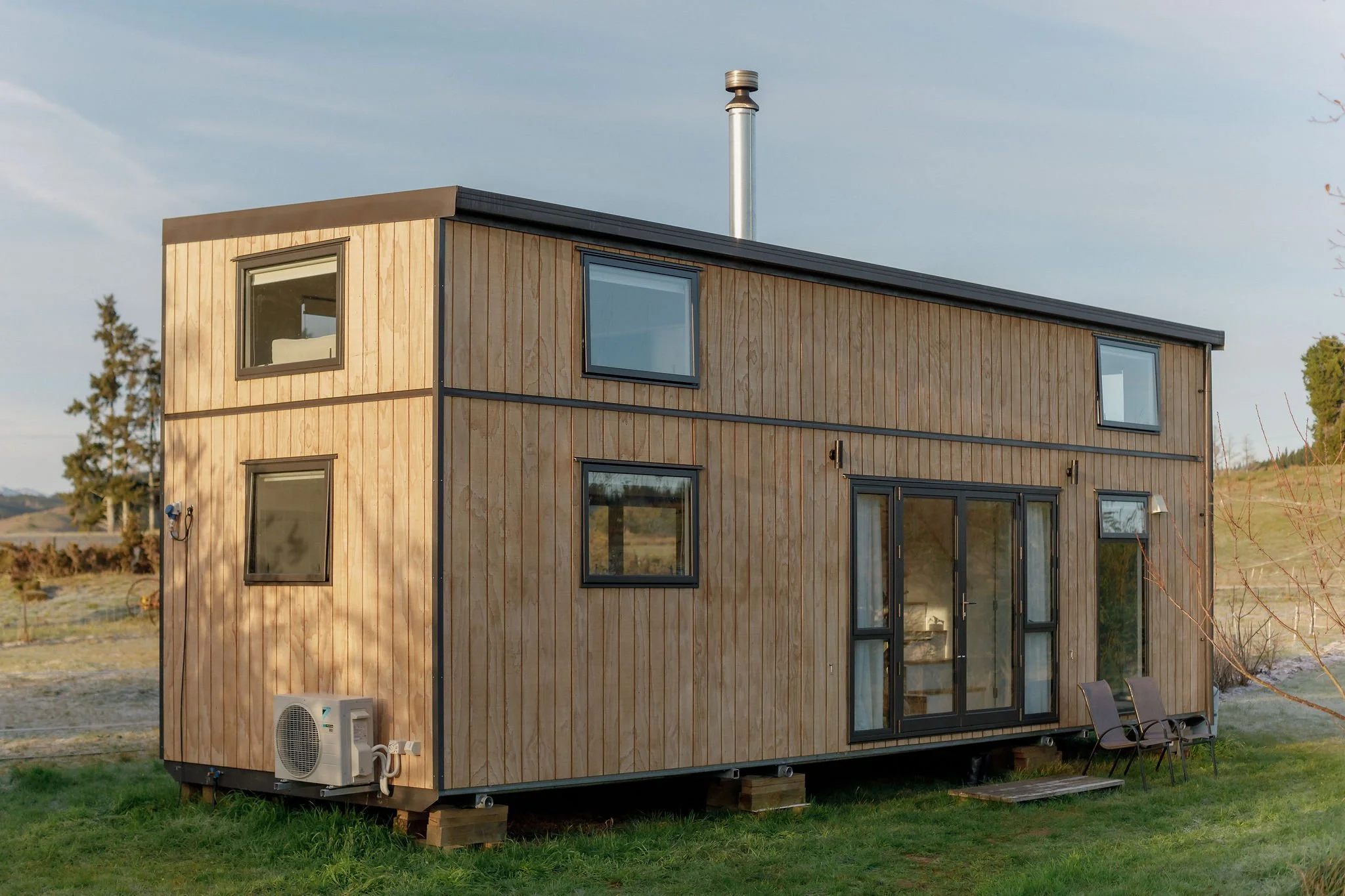
Rick and Team A started the build on 19 May 2026 and the home was finished in the first week of September. That part went exactly as planned. It usually does.
The land was the hard part
We told Ira on day one that we would find the land with her, and that it would probably take longer than the build. It did.
Her brief was narrow on purpose: within cycling distance of the hospital, sunny, a long lease. That rules out most of the region. So we ran our Land Match service properly. We put out a public appeal in Nelson, printed a flyer with Ira's photo on it, and worked through every lead that came back.
Four sites got serious.
A rural block in Redwood Valley looked lovely and fell over on zoning. A second dwelling there needs a discretionary resource consent, which is slow, uncertain and expensive for a single home.
A large section on the edge of the city had room for several homes and a landowner who was keen. We spent weeks with Nelson City Council working through the development contribution, which sits much higher outside the urban boundary, and whether vesting part of the land could offset it. Good site, right landowner, wrong cost for one nurse's home.
A section in a Higher Density area was close to the hospital and permitted as of right. Then we pulled the title. A subdivision consent notice required engineer-supervised earthworks, engineer-designed foundations, a stormwater detention tank and a certified building platform. Somewhere north of $30,000 of Ira's money permanently improving someone else's land, with no way to get it back. We walked away from that one, and we told her why.
A steep site on three titles with an abandoned subdivision plan. Possible, but only if the home stayed fully off-grid to avoid triggering a full development contribution on vacant land. Not what Ira wanted.
Then Jerrica and Don
The site that worked came through the public appeal. A couple with a big back garden two hundred metres from the hospital, in a Standard Density area with enough net site area for a second household. They had thought about how it would work for Ira as much as for themselves before they even rang: shared vegetable garden, use of the shed, parking, pets welcome, Ira builds her own deck.
Getting from a kind offer to a signed arrangement is where most of these things quietly die. So we did the work.
We confirmed with Council in writing what could be sited where, what the development contribution would be and, importantly, what triggers it. It is not the home. It is the drainage connection, which needs a building consent of its own. That distinction changed how the whole deal was structured.
We priced every trade: the levelled pad, the drainlayer, the detention tank, the building consent, and a crane to lift the home over the fence using the neighbours' driveway. We got the neighbours on side.
We negotiated the lease. It is a bare land lease, not a tenancy, five years with two further five-year renewals at Ira's option. Ira pays the establishment costs, including the Council contribution, because she is the one who wants the home there. In return, everything she leaves in the ground is treated as an asset written down over fifteen years, refundable if the landowners end the arrangement early. If she chooses to leave, it stays. Fair both ways.
We helped Ira with the parts nobody warns you about. Her insurance broker's forms wanted wall, roof and floor construction details; we filled them in. We flagged that the carrier's default terms carried the home over the fence at minimal liability, and had that fixed before the lift. We talked her through what she was borrowing and why, and what to check in the loan document before signing.
And we sent everyone a plain list of ten things that had to be true before anyone spent a dollar: Council confirmation, consent granted, quotes in hand, both insurers happy, bank consent if needed, an agreed site plan, power and water metering settled, crane access confirmed. Not a contract. Just three people agreeing what has to happen first.
Where it is at
In September 2026, the home is built and handed over. The lease is almost agreed on every term, pending signature. The drainage consent is going in with Council soon. Ira's finance and insurance are being arranged. Then the pad goes in, the crane comes, and Ira moves into a home she owns, in a garden she shares, five minutes' bike ride from her ward.
Total time from first conversation to handover: five months for the home, and the same five months, running alongside it, to find the land.
What this one taught us
Land lease works in Nelson. It works best in an established back garden with an existing house, inside the urban boundary, with a landowner who wants a neighbour rather than a tenant. Sites that need earthworks, engineering or an off-grid workaround cost the tiny home owner money they never get back, and we will say so before you spend it.
If you are in Ira's position, we will find the land with you. If you are in Jerrica and Don's, we would like to hear from you.